Extremophiles, Nature’s Mini Superheroes
Ever heard of creatures capable of surviving in boiling water, thriving in polar cold, or taking a stroll through the vacuum of space without a spacesuit? That might sound like science fiction, but it is most definitely not. Step into the fascinating world of extremophiles!
These creatures do more than tolerate extreme conditions: they thrive in them! They have earned the name “extreme” from a human point of vue, but for them, such conditions are perfectly normal. In fact, most of the organisms that flourish under these circumstances are very small, like bacteria, amoebas and our all-time favourites, the tardigrades!
Meet the all-around champion: the tardigrade
If extremophiles held a popularity contest, tardigrades would win gold every time. Most of them are not technically extremophiles, since they need fairly mild conditions to grow and reproduce, but they still rank among the toughest organisms on the planet.
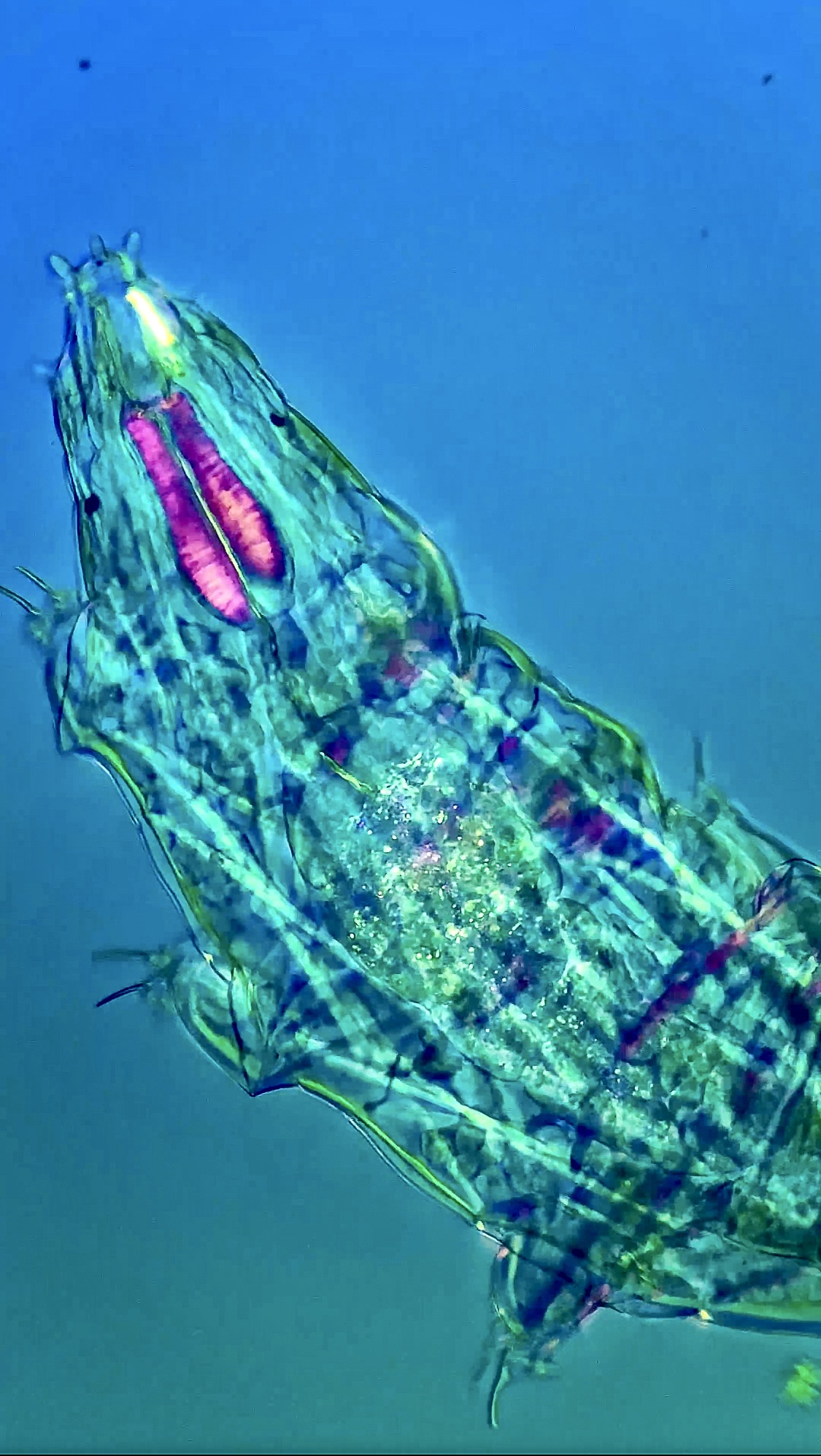
Adult tardigrade. Credits: Chloé Savard (@tardibabe)
Tardigrades are small, plump, usually eight-legged animals with 2 eyes and clawed feet. They are affectionately nicknamed “water bears” or “moss piglets” and typically measure less than one millimetre. They can be found almost everywhere on Earth, from mountain peaks to ocean depths, and probably even in the moss in your own backyard. Although primarily aquatic creatures, they also survive in deserts. How is that possible?
Tardigrades might be cute, but they also have a superpower: cryptobiosis. When the environment turns lethal, such as during extreme drought, they shrivel into tiny dry balls, pause their metabolism, and wait for better conditions… for decades if needed! All it takes to “wake them up” is a little water. Within minutes or hours, they are good as new!
This exceptional endurance has inspired scientists to test the creatures’ limits:
• Polar cold: Some species tolerate temperatures as low as -272.8 °C (close to absolute zero, the coldest temperature physically possible).
• Extreme heat: Some species can withstand 150 °C (for a few minutes at least).
• Space travel: Some tardigrades can survive the vacuum of space and cosmic radiation. Try to beat that!
For a rare peek into the world of tardigrades, check out @tardibabe and their stunning microscopic images:
More champions of the extremes
Tardigrades are not the only living beings capable of withstanding extreme living conditions. Other organisms can survive, and even thrive, in places where life seems impossible to humans.
A bacterium called Planococcus halocryophilus, found in the Canadian Arctic’s permafrost (ground that is permanently frozen), holds the world record for bacterial growth at the lowest temperature ever recorded. Unlike tardigrades, which rely on cryptobiosis to withstand freezing temperatures, this bacterium can reproduce at -15 °C and stay active down to -25 °C. This has attracted significant interest from astrobiologists, who see it as a clue to possible life in the icy oceans of Jupiter’s moons.
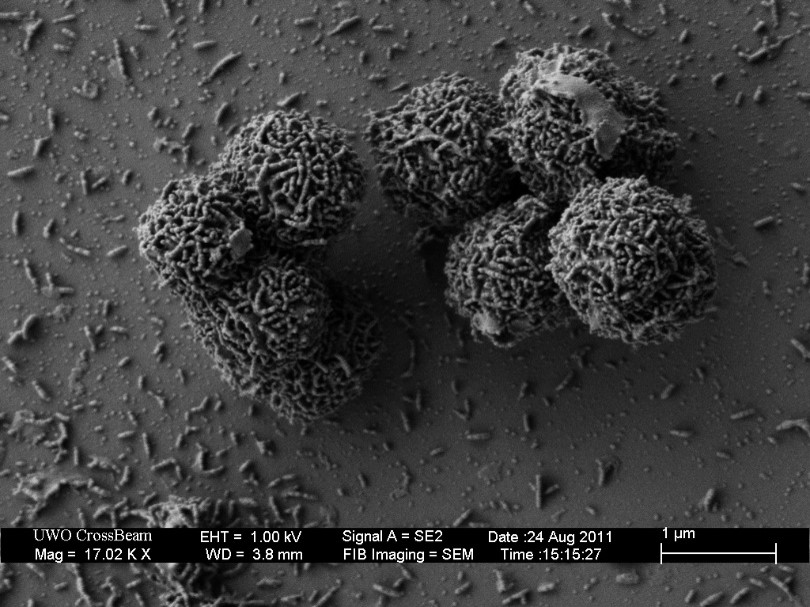
Planococcus halocryophilus thrives in cold, salty soil. Credits: Nadia C. S. Mykytczuk, Simon J. Foote, Chris R. Omelon, Gordon Southam, Charles W. Greer and Lyle G. Whyte
In the Chilean Andes lives another record-holder: Scutiglypha cabrolae. This tiny organism has made its home in the crater lake of a volcano at nearly 6,000 metres above sea level. Up there, the air is thin, UV radiation is intense, and temperatures swing wildly. It is one of the Earth environments that most closely resembles those of the ancient lakes of Mars.
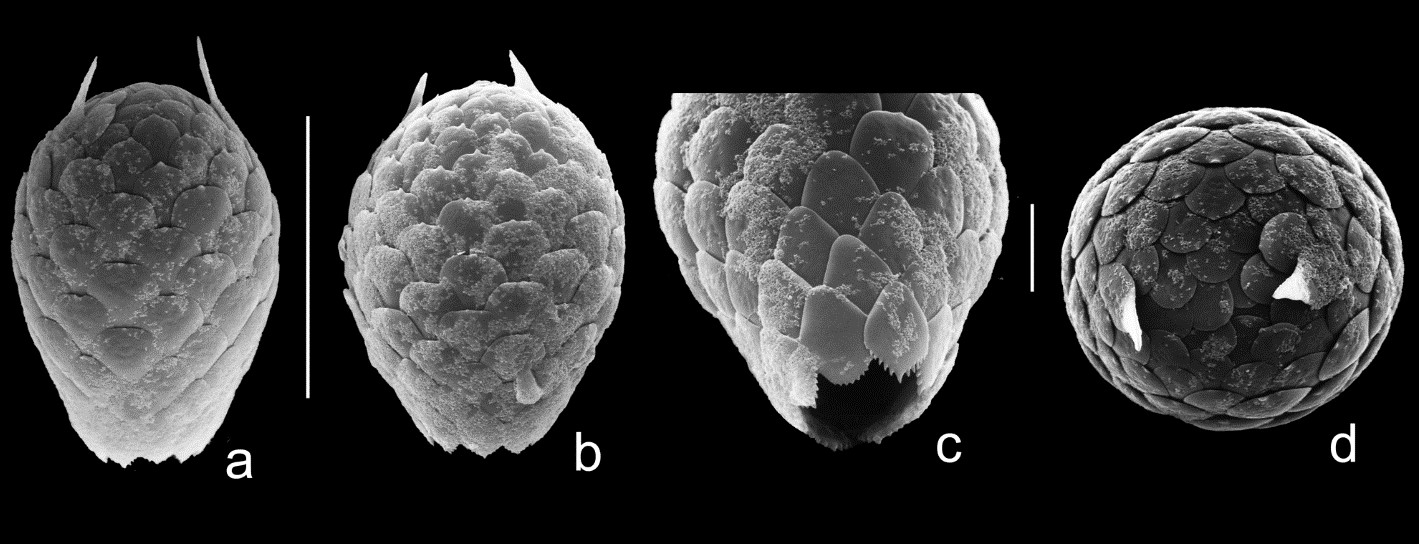
The Scutiglypha cabrolae amoeba lives in the highest lake in the world! Credits: Willem H. De Smet and John A. E.-Gibson
Near the Japanese islands of Okinawa, Oceanobacillus iheyensis has carved out a remarkable niche. This bacterium survives more than 1,000 metres below the sea, in submarine sediments where the pH is very low, pressure is high, and salt levels are very elevated. This environment is reminiscent of those found on other celestial bodies, such as Enceladus, one of Saturn’s moons.
Why study these resilience “superheroes”?
These creatures are not mere curiosities. By studying them, we can understand how life emerged on Earth, and how to search for it elsewhere in the universe.
If life can endure inside a volcano, in permanent ice or under intense radiation, why could it not exist on other planets? Extremophiles teach us something important: life finds a way, even in the most unlikely places.
Want to learn more about extremophiles and the search for life in the universe? Come discover our brand-new exhibition Signs of Life, devoted entirely to this fascinating quest. To infinity, and beyond!
Research and writing: Aline Zimmermann, Maya Simões and Jordan Langlois
References
Sadowska-Bartosz, I., & Bartosz, G. (2024). Antioxidant Defense in the Toughest Animals on the Earth: Its Contribution to the Extreme Resistance of Tardigrades. International Journal of Molecular Sciences, 25(15), 8393. https://doi.org/10.3390/ijms25158393
Weronika, E., Łukasz, K. (2017). Tardigrades in Space Research - Past and Future. Orig Life Evol Biosph 47, 545–553 https://doi.org/10.1007/s11084-016-9522-1
Claxton, S. K. (2004). The Taxonomy and Distribution of Australian Terrestrial Tardigrades. [Doctoral thesis]. https://figshare.mq.edu.au/articles/thesis/The_taxonomy_and_distribution_of_Australian_terrestrial_tardigrades/19441085
De Smet, W. H., & Gibson, J. A. E. (2009). On a new species of euglyphid testate amoeba, Scutiglypha cabrolae, from the Licancabur Caldera Lake, Central Andes. *Acta Protozoologica*, 48(2), 119– 126. https://www.researchgate.net/publication/235767574
Cabrol, N. A., Grin, E. A., McKay, C. P., Friedmann, I., Chong Diaz, G., Demergasso, C., Kisse, K., Grigorszky, I., Ocampo Friedmann, R., & Hock, A. (2003). The Licancabur Project: Exploring the limits of life in the highest lake on Earth as an analog to Martian paleolakes. *Lunar and Planetary Science XXXIV*. https://www.researchgate.net/publication/23815088
Mykytczuk, N. C., Foote, S. J., Omelon, C. R., Southam, G., Greer, C. W., & Whyte, L. G. (2013). Bacterial growth at -15 °C; molecular insights from the permafrost bacterium Planococcus halocryophilus Or1. The ISME journal, 7(6), 1211–1226. https://doi.org/10.1038/ismej.2013.8