
Life at the extremes: Adapt to survive
The continent of Asia features a range of vastly different habitats, from the Himalayas to arid deserts, shaped by geological forces over millions of years, pushing species to develop remarkable adaptations to survive.
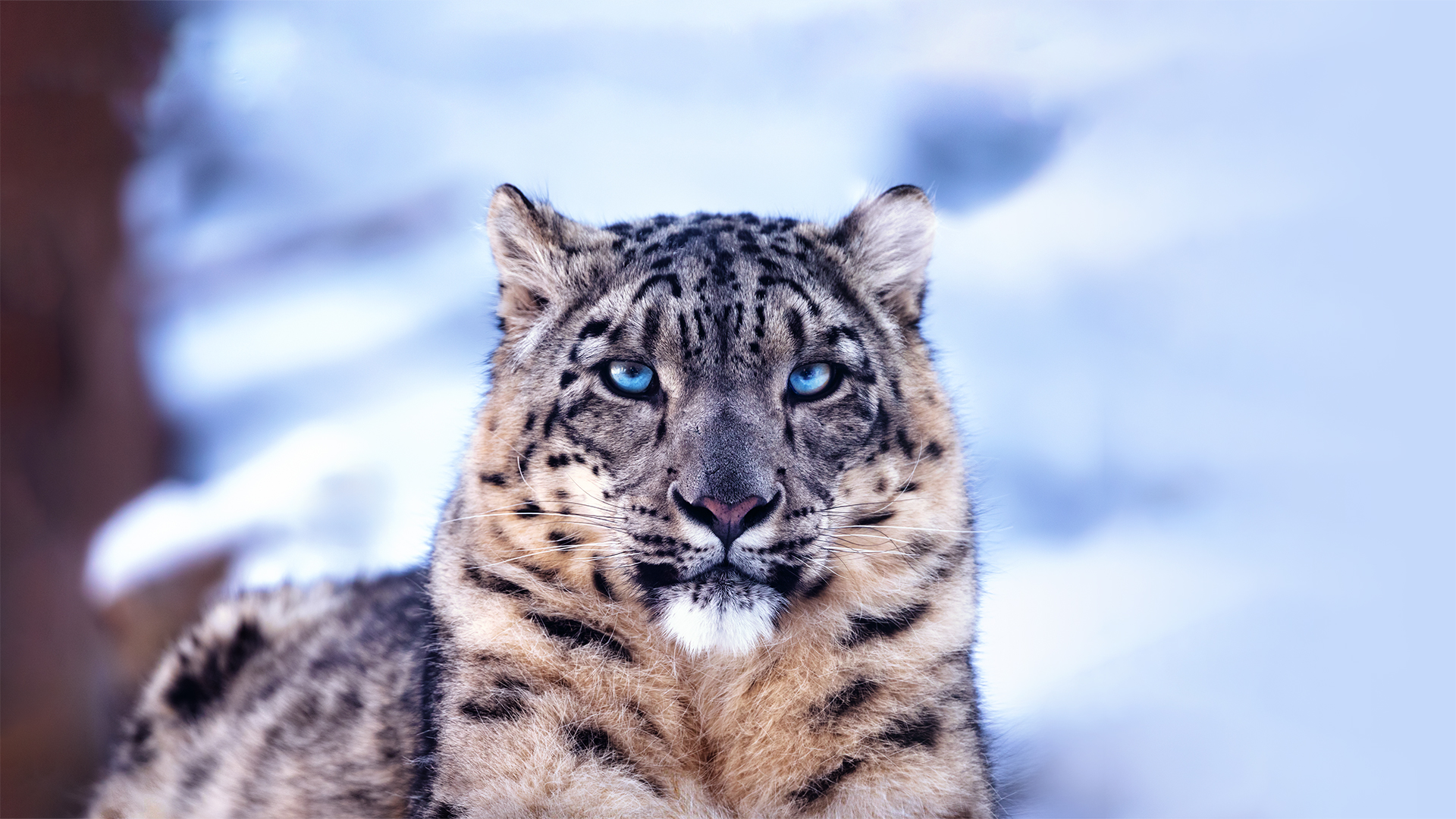
Among them is the snow leopard (Panthera uncia), suited to life in the very cold, high-altitude environment of the Himalayas. Credit: BBC Studios Natural History Unit, Wild Asia - Life at Extremes
The Himalayas were formed by the movement and collision of tectonic plates, a process called orogeny. This slow, powerful force created the soaring peaks that define the region and shape its climate, including a phenomenon featured in Wild Asia: the rain shadow effect. When mountain ranges like the Himalayas intercept atmospheric moisture, they create a striking contrast between lush, wet slopes on one side of their peaks and dry, desert-like terrain on the other. This divide shapes the continent’s remarkable diversity of ecosystems.
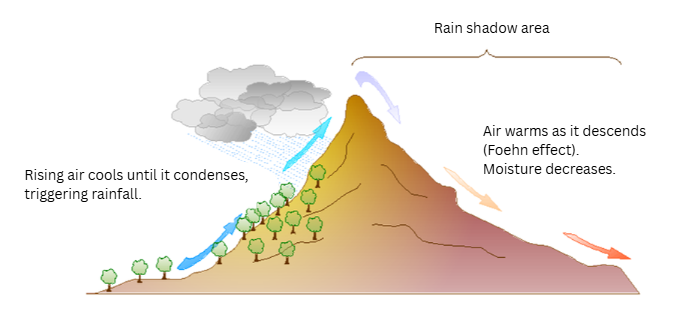
How a rain shadow takes shape. Credit: Fabiocarboni, Wikimedia Commons.
For species like the red panda and the long-eared jerboa, the Himalayan barrier meant adapting, physically and behaviourally, to survive in vastly different biomes.
The Red Panda, King of the Trees
On the wet, lush slopes of the Himalayas, the red panda is in its element. It lives between 2,000 m and 4,300 m above sea level, never far from water and its favourite food: bamboo. This animal’s body features a host of adaptations for life in the treetops. For example, hairy pads on its paws provide ample grip and keep them warm, while rotating ankles let it climb down headfirst, a definite advantage when predators are near.

Credit: BBC Studios Natural History Unit, Wild Asia - Life at Extremes
But one of the red panda’s most remarkable adaptations is tied to its unusual diet. Alongside its five fingers, it has a false thumb, an enlarged bone that helps it grasp and hold on to bamboo stems. The red panda shares this trait—and its love of bamboo—with the giant panda, despite the two species being distant relatives at best.
The Long-Eared Jerboa: Nature’s Chimera
Where the Himalayas give way to open desert, clouds are a rare sight, and the landscape is dry and unforgiving. This is the world of the long-eared jerboa, an animal that looks almost too strange to be real. Its long tail, powerful hind legs and outsized ears bring to mind a mix of mouse, kangaroo and rabbit. And those ears are not just for show: relative to its body size, they are the largest of any animal on Earth!
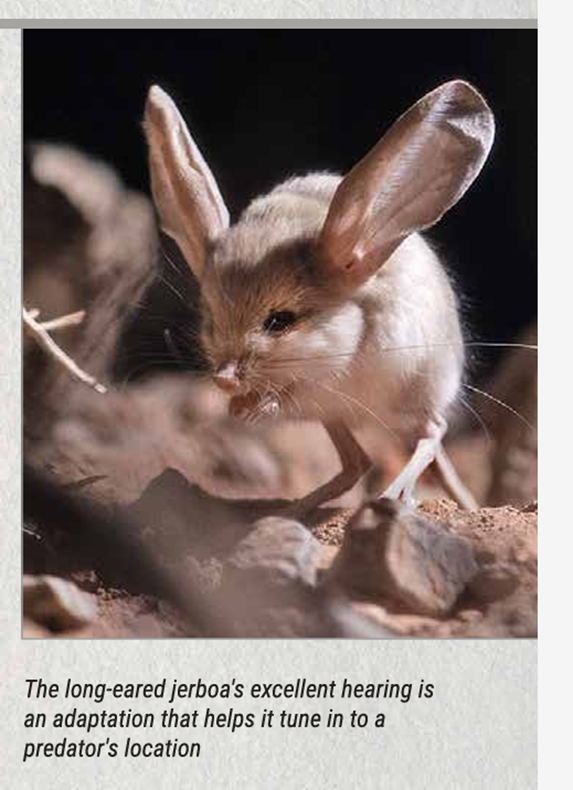
Credit: BBC Studios Natural History Unit, Wild Asia - Life at Extremes
This small rodent ventures out at night, when temperatures drop to more bearable levels. Its keen sense of smell and hearing let it hunt in total darkness. And in one of nature’s tidier solutions, it never needs to drink: the juicy insects it eats provide all the moisture it needs.
Discover these fascinating animals and many more in Wild Asia, now showing at the Science Centre’s IMAX®TELUS Theatre.
And if you love animal photography, don’t miss our featured exhibition, Funny Creatures!
Teacher’s Corner!
Pair the Wild Asia film with our exclusive Shockwave! activity for a school outing that targets key competencies of the Quebec Education Program. This interdisciplinary experience bridges science, technology and geography, drawing on secondary-level progressions of learning to get students learning through hands-on, active exploration.
Click here to book your visit: https://www.montrealsciencecentre.com/groups/plan-your-visit
After your visit, here are two classroom activities to help you explore natural phenomena and meteorology further:
For elementary students:
- Create your own weather forecast: https://www.eclairsdesciences.qc.ca/wp-content/uploads/2016/12/weather-forecast.pdf
For secondary students:
- Simulate a tsunami: https://science.gc.ca/site/science/en/educational-resources/activity-books/activity-book-6/activity-book-6-intermediate-level#13
Main references: